


How does daylight saving affect our health
- and what can we do when we cannot sleep?
 Sleep disorders are common in the western world, and many people find that the problem gets worse when we shift to daylight saving and get an extra hour of light in the evening. It can be difficult to fall asleep when it is still light outside, and this may even be a stress factor for those people who need to get up early the following day. Getting just one hour less of sleep can affect your concentration, mood, heart function, fertility, and a number of other things. Nevertheless, the sleep hormone, melatonin, combined with some practical advice may work wonders for your sleep, and proper sleep is of great importance to your health.
Read more about how daylight saving affects your health and what to do if you cannot sleep
- Created on .
 Medical science has claimed for decades that elevated cholesterol levels pose a health threat, especially if you have too much of the so-called “bad” cholesterol – or LDL (Low-Density Lipoprotein). However, a team of international experts is now arguing that this theory is exaggerated. In fact, the experts specifically advise against taking cholesterol-lowering statins. Meanwhile, science is focused on how to improve the safety of statins by combining them with supplements of
 According to a Japanese study, some people with Parkinson’s disease may find that coenzyme
  A new study shows that patients with early stages of Parkinson’s disease may benefit from getting more
  Night owls stay up late in the evening and get up late in the morning, and they risk depression, according to a new study. In fact, there seems to be a link between the increasing number of people with disturbed 24-hour rhythm who expose themselves to blue light from computer screens and other devices, and who become depressed. Lack of sleep at night and low levels of the hormone melatonin are a burden to the brain and nervous system in several different ways.
 Asthma is the leading disease among children and adolescents in the Western world, and the rate has been going up for the past 20 years. A new Danish study that is published in the New England Journal of Medicine shows that pregnant women who take supplements of
 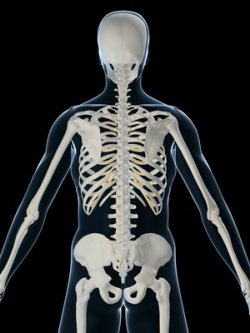 Fragile bones, also known as osteoporosis, is an insidious scourge. Science has its eyes on
 All our cells contain different
  Nothing beats a good night’s sleep. Still, sleep disturbances are widespread, and surprisingly many people struggle through the day, trying to survive on far too much coffee and other stimulants – and they cannot do anything about the problem. It turns out that many vegetarians, users of birth control pills, older people, and diabetics suffer from sleep problems because they lack
  Even minor
  A team of scientists from Oregon State University in the United States has managed to explain why lack of