


Zinc deficiency in people with dementia is associated with complicated infections and increased mortality
 As the number of older people increases, so does the number of people suffering from dementia. In addition to progressive cognitive decline, people with dementia have an increased risk of infections, systemic inflammation, sepsis, and premature death. There are also indications that deficiency of the trace element zinc is associated with complicated infections and increased mortality. This is shown by a population-based study published in Frontiers in Nutrition, in which the researchers describe the importance of zinc for the immune system and other vital functions.
Fifty-five million people worldwide are currently living with dementia, and this number is expected to triple by 2050. In dementia diseases such as Alzheimer’s disease, the brain and its functions gradually deteriorate. In the final stage, areas of the brain responsible for functions such as movement and breathing are affected, which can lead to the patient’s death. People with dementia also have a higher risk of complicated infections and sepsis.
It is known that zinc deficiency is common among older people and patients with dementia. However, it has been unclear whether this affects the prognosis. The purpose of the new population-based study was therefore to investigate the association more closely.
Zinc deficiency affects the lifespan and health of people with dementia in several ways
The researchers used a range of data from the TriNetX Research Network, which collects information globally from various health authorities and population studies, allowing them to observe developments in different patient groups.
The new study included 2,482 selected participants who had been diagnosed with dementia between January 2010 and December 2024. The participants’ blood zinc levels were assessed based on the first blood test, with values below 70 µg/dL defined as deficient and values between 70–120 µg/dL defined as normal.
The researchers divided the 2,482 selected participants so that one half had zinc deficiency and the other half, which served as the control group, had normal blood zinc levels. The researchers then primarily examined 1-year mortality (death from all causes over a one-year period). Secondarily, they examined complications such as sepsis, admission to an intensive care unit, urinary tract infections, pneumonia, acute kidney injury, and elevated levels of C-reactive protein (an inflammation marker). When the researchers compared the group with dementia and zinc deficiency with the group with dementia but without zinc deficiency, they found that zinc deficiency was statistically associated with the following:
- Higher 1-year mortality
- Increased risk of sepsis
- Increased risk of admission to an intensive care unit
- Increased risk of urinary tract infections
- Higher CRP levels as a sign of chronic inflammation
- Severe zinc deficiency (below 50 µg/dL) was associated with an even higher risk of sepsis and 1-year mortality.
Based on these findings, the researchers conclude that people with dementia who have zinc deficiency have a higher risk of 1-year mortality and complicated infections. In addition, severe zinc deficiency is associated with an even poorer prognosis. The researchers therefore call for further and larger studies to determine whether zinc supplementation can improve the prognosis of patients with zinc deficiency.
The role of zinc in the immune system and regulation of inflammation
Zinc is important for several hundred different enzyme functions, gene activation, and overall health. In their introduction to the population-based study, the researchers describe how zinc affects both the innate and adaptive immune systems, which should combat various infections and develop a form of immunity. Zinc also contributes to regulating inflammatory processes, thereby preventing them from causing damage. These processes are particularly problematic in dementia and many other chronic diseases characterized by chronic inflammation. In addition, complicated respiratory infections and sepsis are characterized by hyperinflammation, making these conditions life-threatening.
Zinc is also incorporated into important antioxidants that protect cells and tissues against damage caused by free radicals and oxidative stress.
Why are many people with dementia and older people often deficient in zinc?
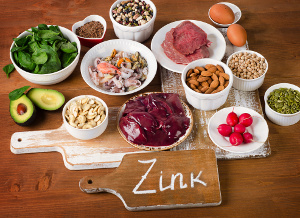
Zinc is found in meat, liver, shellfish, eggs, dairy products, nuts, seeds, and beans. We absorb zinc most readily from animal sources. However, many older people and people with dementia eat small amounts of food, have reduced appetite, or eat a diet predominantly based on refined and plant-based sources. In addition, low stomach acid and aging processes can impair the absorption and utilization of zinc itself. The same applies to antacids, diuretics, and other types of medication. There may also be an increased need for zinc in various physiological conditions.
This means that many people with dementia and older people have suboptimal zinc status or an actual zinc deficiency, which negatively affects their immune system and health.
Reference:
I-Wen Chen et al. Association between zinc deficiency and adverse outcomes in patients with dementia: a matched cohort study. Frontiers in Nutrition. 2026
TIP! See also the related articles
Search for more information...

- Created on .